

Introduction
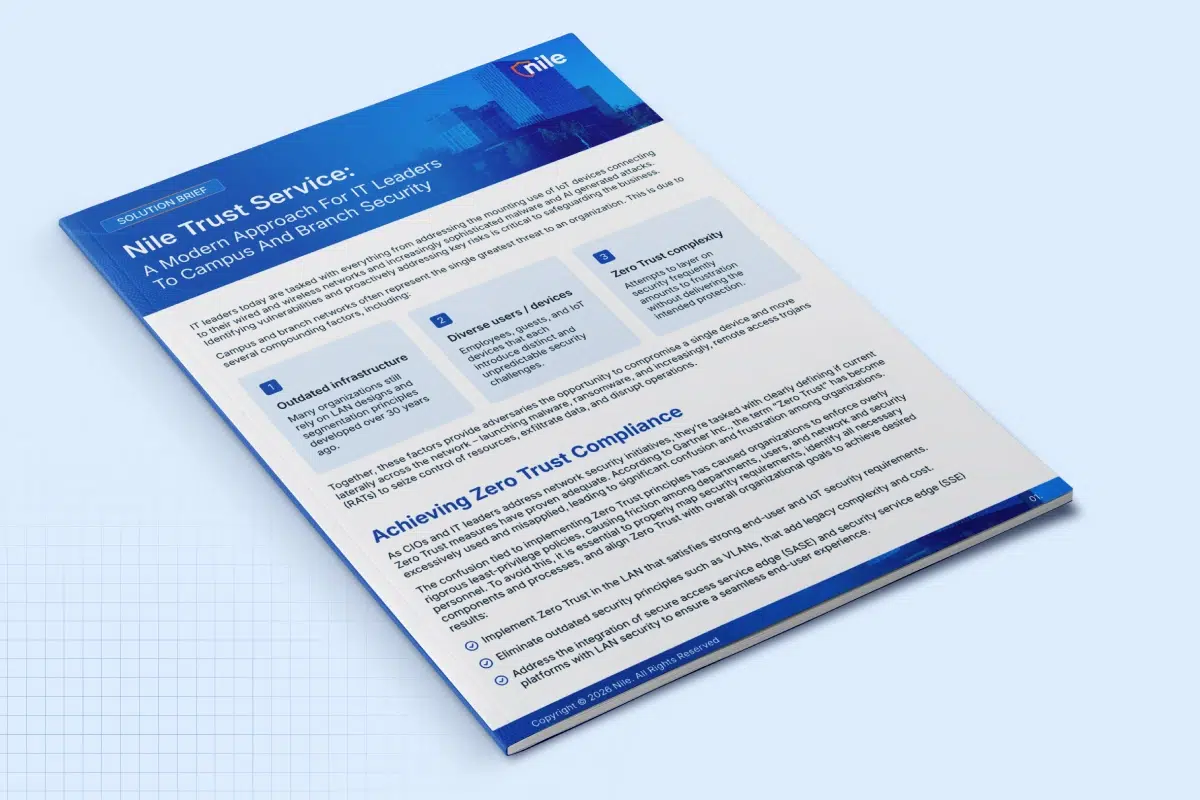
IT leaders today are tasked with everything from addressing the mounting use of IoT devices connecting to their wired and wireless networks to increasingly sophisticated malware and AI-generated attacks. Identifying vulnerabilities and proactively addressing key risks is critical to safeguarding the business.
Campus and branch networks often represent the single greatest threat to an organization. This is due to several compounding factors, including:
- Outdated infrastructure. Many organizations still rely on VLANs and segmentation principles developed over 30 years ago.
- Diverse users and devices. Employees, guests, and IoT devices each introduce distinct and unpredictable security challenges.
- Zero Trust complexity. Attempts to layer on security frequently amount to frustration without delivering the intended protection.
Together, these factors provide adversaries the opportunity to compromise a single device and move laterally across the network – launching malware, ransomware, and increasingly, remote access trojans (RATs) to seize control of resources, exfiltrate data, and disrupt operations.
Achieving Zero Trust Compliance
As CIOs and IT leaders address network security initiatives, they’re tasked with clearly defining if current Zero Trust measures have proven adequate. According to Gartner Inc., the term “Zero Trust” has become excessively used and misapplied, leading to significant confusion and frustration among organizations.
The confusion tied to implementing Zero Trust principles has caused organizations to enforce overly rigorous least-privilege policies, causing friction among departments, users, and network and security personnel. To avoid this, it is essential to properly map security requirements, identify all necessary components and processes, and align Zero Trust with overall organizational goals to achieve desired results:
- Implement Zero Trust in the LAN that satisfies strong end-user and IoT security requirements.
- Eliminate outdated security principles such as VLANs that add legacy complexity and cost.
- Address the integration of secure access service edge (SASE) and security service edge (SSE) platforms with LAN security to ensure a seamless end-user experience.
Additional Recommendations
Initial steps must be taken to determine where previous Zero Trust efforts were unsuccessful and pinpoint where legacy tech, cost, or complexity blocked compliance initiatives. If roadblocks were encountered, determine what hampered meeting any internal or external requirements. The steps to take:
- Determine if existing legacy network infrastructure and software will support evolving Zero Trust initiatives without impacting IT resources, budget, users, and business objectives.
- Ensure that a vendor natively supports the integration of LAN Zero Trust principles and the security offered by leading SASE/SSE solutions.
- Explore a network vendor’s ability to automatically place endpoint devices into a “segment of one” without additional complexity to minimize any attacks or threats.
- Identify the long-term value of security add-ons, such as NAC appliances, that a modern network architecture natively supports, allowing you to eliminate unwanted complexity.
The Nile Zero Trust Advantage
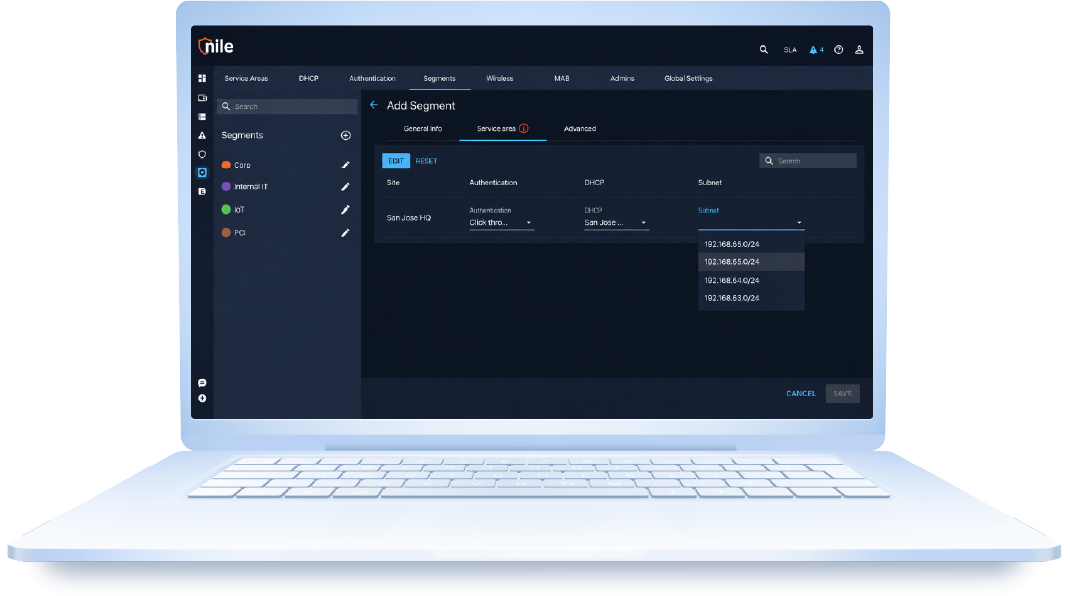
Nile’s Zero Trust Fabric includes modern security principles that offer customers a new level of security and visibility that eliminates legacy vulnerabilities, prevents attacks from moving laterally, and ensures a unified experience regardless of whether connecting remotely or in the office, factory, distribution center, conference center or classroom.
Organizations gain the advantage of modern network and Zero Trust principles without the cost, complexity, and deployment challenges.
FAQ
Frequently asked questions
Campus and branch networks often represent the single greatest threat to an organization because of outdated infrastructure and segmentation, diverse users and devices, and complexity. Together these factors let adversaries compromise a single device and move laterally to launch malware, ransomware and remote access trojans (RATs). Nile’s Zero Trust Fabric is designed to prevent attacks from moving laterally and unnoticed.
According to Gartner, the term “Zero Trust” has become excessively used and misapplied, leading to significant confusion and frustration. Nile notes that this confusion has led organizations to enforce overly rigorous least-privilege policies that cause friction among departments, users, and network and security personnel.
Yes. Nile recommends eliminating outdated security principles such as VLANs, which add legacy complexity and cost. A network that automatically places endpoint devices into a “segment of one” without additional complexity is what should happen today. Nile’s Zero Trust Fabric applies this security principle to eliminate legacy vulnerabilities and prevent attacks from harming your business.
Nile natively supports the integration of LAN Zero Trust principles with the security offered by leading SASE/SSE solutions, so that end users receive a seamless experience. Nile’s Zero Trust Fabric ensures a unified experience regardless of where users connect - either remotely or in the office, factory, distribution center, conference center or classroom.
Nile recommends identifying the long-term value of security add-ons, such as NAC appliances. The complexity to manage NAC solutions is often a resource burden. A modern approach is to natively support access control within the network fabric, allowing organizations to eliminate unwanted complexity and burden. Nile’s Zero Trust Fabric gives you access control and policy management without the cost, complexity and deployment challenges of legacy approaches.