








Solutions for Decision Makers / CIOs
Nile for CIOs
Turning Network & Security into a business Advantage
The CIO Challenge
Deliver Outcomes Amid Rising Complexity
Today’s CIOs are expected to deliver growth, resilience, and innovation at the pace the business demands – while the network and security stack underneath is often the very thing slowing them down and driving up risk
Top Challenges
-
1
Escalating Cyber Risk
Across campus, branch, IoT, and hybrid work – one breach can define the brand and land squarely on the board agenda
-
2
Operational Complexity
From fragmented networking and security stacks that finger-point when something breaks
-
3
Limited Visibility and Control
Across users, devices, and unmanaged “things” – expanding the breach surface
-
4
Unpredictable, CapEx-Heavy Costs
Tied to refresh-driven hardware cycles that trap capital instead of fueling innovation
-
5
Talent Shortages and Burnout
As scarce engineers are consumed by 24/7 operations and incident response instead of strategic work

Bottom Line
Legacy network and security architectures slow the business down while increasing risk – today’s market leaders run on modern foundations built for speed, security, and scale
Built for Outcomes
Nile delivers a secure, autonomous NaaS platform that built on a strong zero-trust architecture, cloud delivered services and autonomous operations
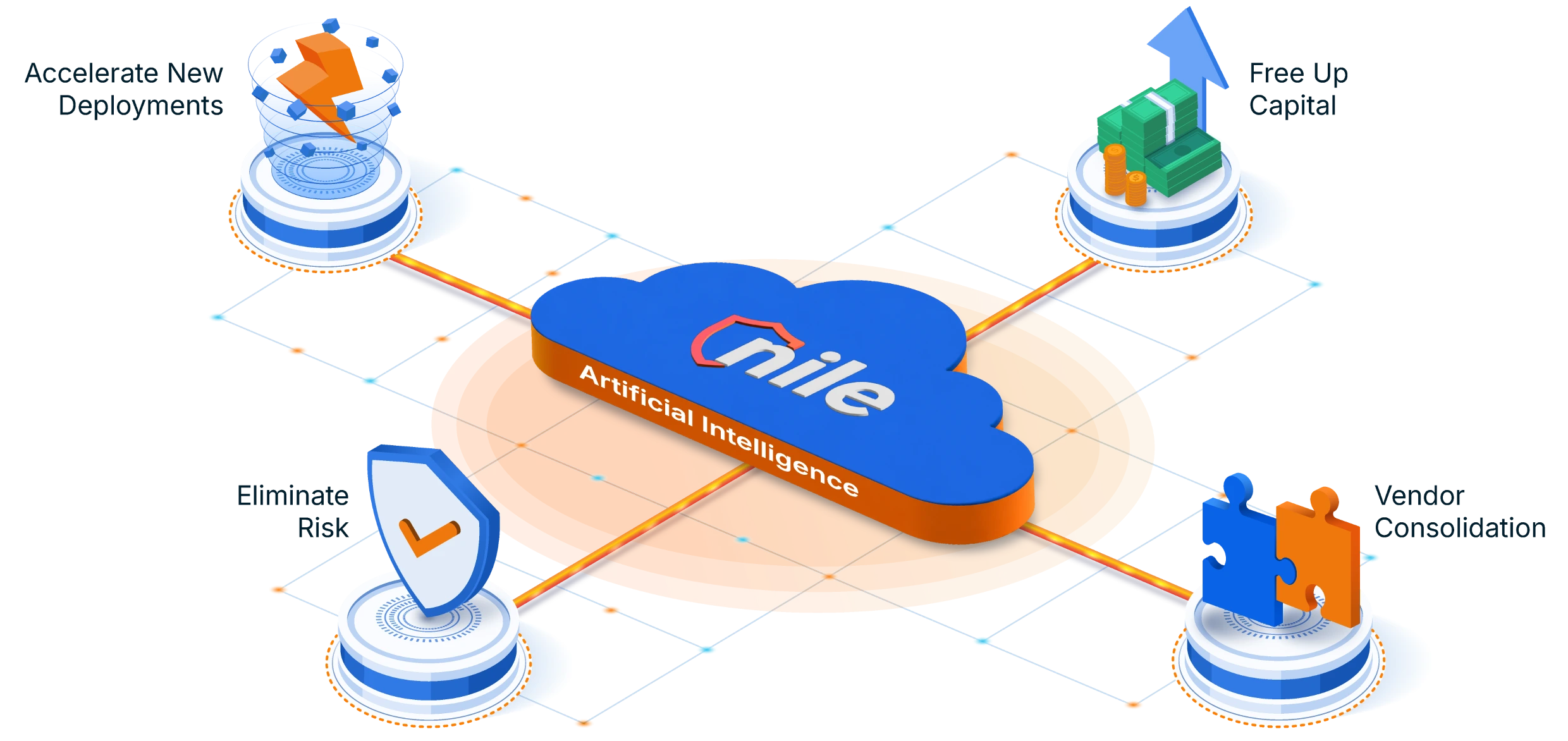
The Nile Approach
-

Zero Trust Access
For every user, device, and IoT endpoint
-
Integrated Network & Security
No silos, no stitching, no finger-pointing
-
AI-Driven Automation
For operations, detection, and response
-
As-a-Service Model
With predictable, subscription-based pricing and continuous modernization included
-
End-to-End, Real-Time Visibility
Across campus and branch environments

“In evaluating new enterprise network solutions, the Nile Access Service presented the most compelling value proposition, as it enables us to focus our team’s efforts on technology projects critical to our business’ core competence and not simply ‘keeping the lights on.’ Other incumbent vendors were pitching us the same architectures they presented more than five years ago. There simply wasn’t any growth or innovation when compared to Nile’s solution.”
Kevin Staton
CIO, Clark Schaefer Hackett
Why Legacy Network & Security Architectures Hold CIOs Back
Legacy Approach
- Disjointed network and security tools
- Hardware-centric, CapEx-heavy refresh cycles
- Manual, reactive operations
- Manual policy enforcement
- Limited visibility into IoT and unmanaged devices
Business Impact
- Slower incident response and gaps in coverage
- Budget inflexibility & capital trapped instead of fueling growth
- Higher downtime and longer MTTR that hit users and revenue
- Human error and inconsistent security posture
- Increased breach surface and board-level brand risk

Reduce Risk by Design
Zero Trust built into the network and continuous monitoring shrink the attack surface and keep the business out of the headlines

Free Capital for Innovation
Refresh included as a service shifts 30–50% lifecycle savings from infrastructure to strategic initiatives

Cut Operational Overhead
Autonomous operations cut overhead 60–80% and free scarce engineers for higher-value work

Accelerate Digital Initiatives
New sites, acquisitions, and offerings go live in days or weeks, not months

Elevate Experience and Uptime
AI-driven detection lowers MTTD/R while consistent, secure access improves user experience everywhere

De-risk Execution
A single partner with financially-backed guarantees replaces vendor sprawl with contractual accountability
Old Way vs. Nile Way
| Dimension | Legacy Architecture | Nile Secure NaaS |
|---|---|---|
| Operating Model | DIY, tool-based | Secure, autonomous NaaS |
| Security Model | Perimeter-based, bolted on | Zero Trust by design (identity-first) |
| Cost Structure | CapEx + refresh cycles every 5–7 years | Predictable subscription, refresh included |
| Operations | Manual, reactive | Automated, AI-driven |
| Detection & Response | Slow, manual triage | AI-driven, lower MTTD/R |
| Visibility | Fragmented | Unified, real-time |
| Accountability | Many vendors, finger-pointing | Single partner, contractual guarantees |
| Time to Deploy | Months | Days / weeks |