


Use Case / Threat Containment
Breach And Malware Containment
Traditional Quarantining Methods Create Complexity And Security Gaps
Nile offers a modern approach – one that automatically isolates devices, restricts communications and controls a blast radius the radically improves compliance initiatives.
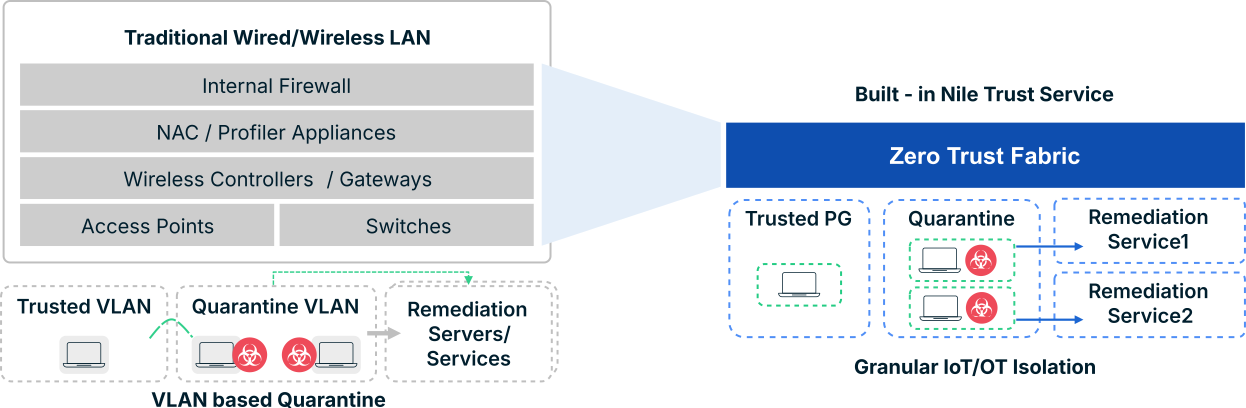
- Unreliable, coarse containment
- Exposes devices to additional threats
- Deterministic containment
- Per-device isolation, no VLAN exposure
Nile’s Leading-Edge Differentiation

Identity-based polices and containment with continuous enforcement maps to evolving Zero Trust requirements.

Automated segment-of-1 isolation eliminates lateral movement and limits a potential blast radius.

Industry-first embedded Zero Trust allows any organization to achieve Zero Trust compliance.
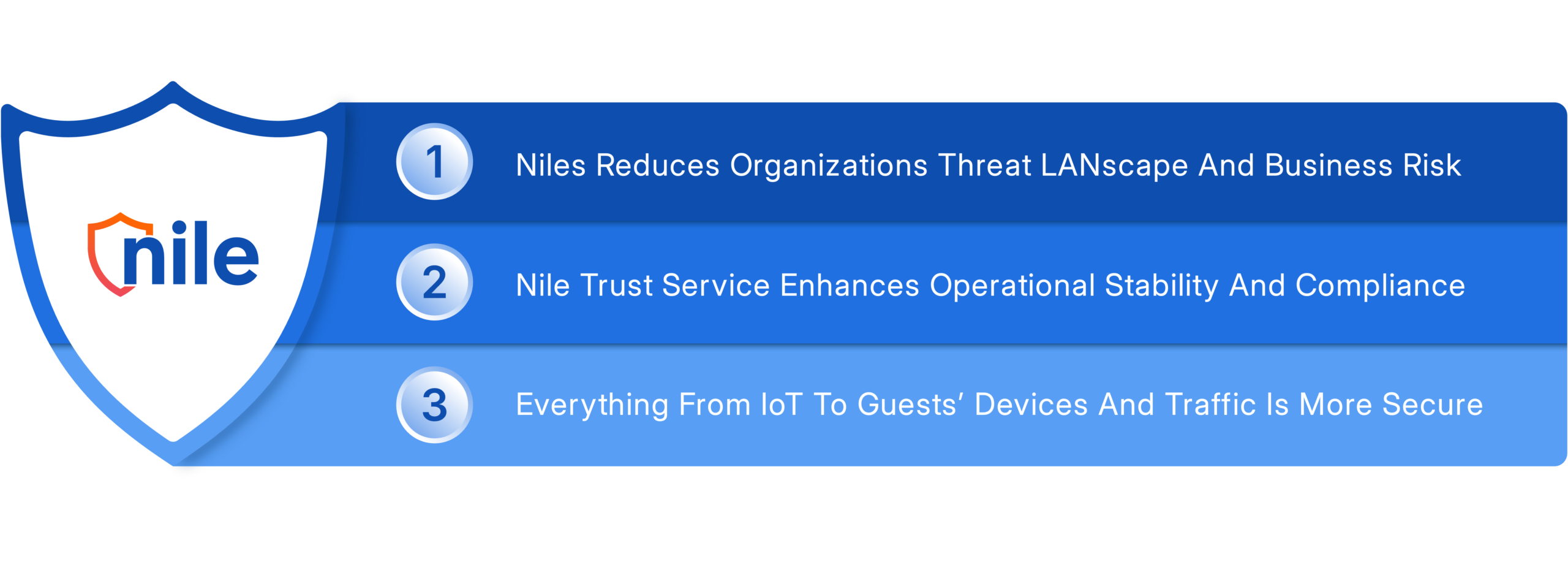
Nile Makes Threat Containment Easy
Microsegmenatation By Default
All devices are placed into "segment-of-1" isolation without complex integration projects and cost.
No VLAN-Based Complexity
VLAN-based imitated threats and intricate network changes are replaced with native Zero Trust enforcement.
Enhanced Compliance By Design
Organizations instantly gain measurable network and per-device security outcomes without IT or user burden.
Simplified Quarantine And Containment
For a financial services customer, real-time threat containment is not a nice-to-have; it is a requirement. For any device not in compliance, Nile isolates, enforces a per-device policy, and only allows access to a specific remediation service by default.
No complex VLAN assignment, timing dependency, and operational complexity.

Breach And Threat Containment Shouldn't Be Difficult
- Legacy Upgrade Approach
- Nile Secure NaaS Approach
- Broad VLAN-based segmentation open to additional exposure
- Per-device isolation with least-privilege access
- Non-deterministic remediation based on complex network changes
- Deterministic policy-based model without complexity
- Complex and expensive NAC integration
- No legacy NAC solutions required
- High operational overhead
- Simplified model that leverages built-in Trust Service capabilities
- Unpredictable, with hidden costs
- Predictable NaaS model - with built-in support
Ready For Simplified Breach And Malware Containment?
Download Solution Brief