


Share Via
Many organizations, including the World Economic Forum, have made it clear: Europe’s future growth depends on its global competitiveness. But strategy papers mean nothing without execution. The real battleground is technology—specifically how quickly organizations can modernize infrastructure, and adopt AI and autonomous systems to leapfrog legacy constraints.
A recent article (Europe’s economic outlook: managing short-term shocks is no longer enough – by Ricky Li and Jeromin Zettelmeyer, June 2026) highlighted the top five risks in Europe according to results of the Executive Opinion Survey data over the last three years. “Talent and/or Labour Shortages” is listed every year.
What if Europe could modernize while liberating scarce IT resources from manual configuration and complexity, allowing them to lead the way on future technologies? By automating the core network, organizations can shift their focus entirely to driving high-impact artificial intelligence initiatives.
It sounds easy, but if the established ways of doing things have foundations that are decades old, sometimes it needs someone to question the status quo and create disruption.
The 1990s were formative, but there must now be better ways, right?
It was a formative time for Networking and Network Security. The industry moved from Hubs to Switches. The LAN saw the introduction of 10Base’T and Fast Ethernet, IEEE released the first wireless standard (802.11 in 1997), and standardized features emerged such as IEEE 802.1Q in 1998 for VLANs.
This period was also formative for the development of most major vendors in this space – who have largely remained the major players. Which is perhaps why innovation has tended to be incremental rather than transformative, many of the industry challenges today are the same we´ve had for decades. And while there are differences between legacy vendors – they all still use the same architecture and methodologies that they were using decades ago.
In the 1993 film Groundhog Day, Bill Murray experienced the same day repeatedly, until he shifted his thinking and actions. And so perhaps until the industry shifts its thinking and actions, we will continue to be tying up highly skilled resources managing things like:
- Extreme complexity: From installs, configuration, and security tools to management and operations dashboards.
- IT resourcing constraints: Difficulty in recruiting, training and retaining skilled and experienced staff
- Growing list of features: But then often just using default parameters.
- Disparate security solutions: Increasing difficulty implementing Zero Trust principles and containing threats
- Lack of Trust: Once installed, many teams are cautious about making changes, even installing patches.
All of which make change and innovation slower for the customer and increase the Total Cost of Ownership over the lifecycle of the products and solutions. Things which are rarely factored fully into upfront purchase decisions.
These are the same things I heard when I first started in this industry over 20 years ago. So today, when you see marketing messages talking about the latest additional functionality or overlay which has been added to address these problems – doesn’t it feel a bit like you’re experiencing a Groundhog Day?
Why is this the case?
Could it be that innovation has been incremental to existing vendors’ businesses? That we haven’t had a visionary who has taken a step back and thought about how to address the root causes of these challenges?
Have short-term corporate objectives been an inhibitor to the kind of long-term vision and patient execution which is necessary for architectural innovation? Have frequent reorganizations, mergers and acquisitions stifled getting a ´Challenger Spirit´ off the ground?
- Could it be that innovation has been incremental to existing vendors’ businesses? That we haven’t had a visionary who has taken a step back and thought about how to address the root causes of these challenges?
- Have short-term corporate objectives been an inhibitor to the kind of long-term vision and patient execution which is necessary for architectural innovation? Have frequent reorganizations, mergers and acquisitions stifled getting a ´Challenger Spirit´ off the ground?
There are good books on this kind of phenomenon. One is called, The Challenger Spirit (by Khurshed Dehnugara and Claire Genkai Breeze). “Despite legions of CEOs striving for, demanding and requesting ´innovation´ and ´empowerment´, the conditioning of most workforces even at the most senior levels is hard to overcome. They have become so accustomed to doing as they are told, managing the politics and keeping their noses clean, that it is hard to walk through the door even though the CEO is holding it open for them.”
AI has created the compelling event for change
For those who have adhered to the, “if it isn’t broken, don´t fix it” mindset, despite the issues mentioned above, AI could well be the catalyst that breaks the cycle and forces a rethink.
- AI is essentially a new form of automation, where a complex network foundation is a barrier.
- IT organizations overburdened with manual operations and troubleshooting tasks cannot keep up. They’ll never be successful in performing a major overhaul of the business that expects to leverage AI.
- With AI further enabling bad actors, defending against threats also requires AI to defend against it. For example, it´s no longer good enough to gradually roll out software patches. Nor are legacy architectures of the 1990s that leverage technologies such as VLANs able to stand up against today’s emerging threats.
Organizations today must account for the gaps in the legacy network architectures. They must also factor in the overall cost of running a network, as it not only encompasses the network itself but how budget and resource constraints affect overall business objectives.
Nile’s Visionary Spirit
The more I learn about Nile, our architecture, and why the company was built, the better I understand why our founders redesigned the traditional network. We are quickly changing the industry’s approach to how networks are built and consumed by offering a secure Network-as-a-Service (NaaS) — and a modern approach that delivers functionality and guaranteed outcomes rather than legacy complexity.
- A radically simplified network model – More efficient, more reliable, more secure, and easier to learn.
- An embedded Zero Trust Fabric and Cloud-based Services portfolio – Eliminating the need for VLANs and overlay solutions like NAC appliances.
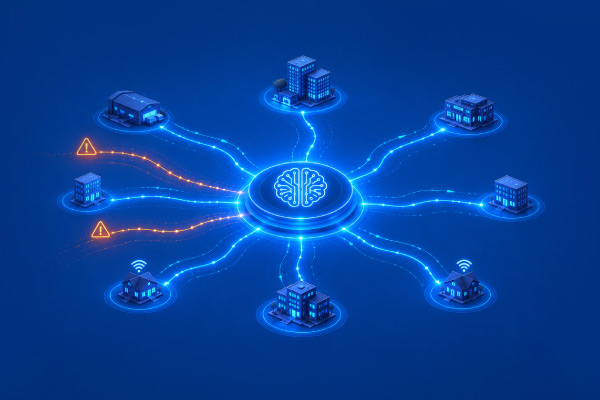
- AI-native Autonomous Operations – Delivering better NetOps capabilities, faster deployments, and dramatically lower TCO.
- Included Product Lifecycle Management – The only vendor to take responsibility for how our network infrastructure and services operate.
- Financially-backed Service Guarantee – The one vendor to stand behind a 99.95% coverage, capacity, and availability SLA across your entire deployment.
Learn More